

Implementing-the-Problem-Solving Process

How Problem-Solving Process (PSP) Can Help You Address Complex Engineering Problems

Leveraging the Why-Why-Why Technique

In today’s fast-paced and competitive engineering environment, quick and effective problem-solving is essential to maintaining operational excellence, driving innovation and capturing market share.  The Problem-Solving Process (PSP) provides a structured approach to addressing complex engineering problems, from identifying and defining problems to selecting, implementing and verifying solutions. By utilizing the Why-Why-Why Technique, engineers can dig deeper into issues to uncover the root causes, leading to more robust and sustainable solutions.  This method improves the problem-solving capabilities of engineering teams, ensuring that challenges are addressed comprehensively and systematically, resulting in successful outcomes for various engineering projects. “Fix it Once, Fix it Right!”

Let’s look at it with a simple case study.

Step 1: Identify and Define the Engineering Problem

Let’s assume we have designed a new electronic device enclosure.  During testing, it was found that the device overheats, causing performance degradation and potential damage to internal components.

Problem Definition:  The specifications require the device to operate within a temperature range of 0°C to 50°C, but it overheats, currently reaching temperatures of up to 70°C under normal operation

Step 2: Analyze Possible Failure Modes in the Engineering System

Failure Modes Analysis:   Engineers analyzed the enclosure design and identified several contributing root causes that gave rise to the overheating issue:

  • The power consumption of internal components generates heat.
  • Inadequate enclosure ventilation leads to poor heat dissipation.
  • Heat sink orientations and locations are not optimum for cooling.
  • Poor thermal conductivity materials are used in the enclosure.

Using the Why-Why-Whys Technique,

Continue to ask Why until you reach the Root Cause, don’t be fooled by Symptoms!

Why is the device overheating? Because the internal temperature exceeds the safe operating range.

Why does the internal temperature exceed the safe range? Because the heat generated internally is not dissipating efficiently.

Why is heat not dissipating efficiently? Because the enclosure lacks adequate ventilation.

Why does the enclosure lack adequate ventilation? Because the design did not include sufficient vents or cooling mechanisms.

Why did the design not include sufficient cooling mechanisms? Because the initial design focused more on aesthetics, noise levels and compactness rather than thermal management.

Step 3: Generate and Analyze Potential Solutions through Creative Thinking Potential Solutions:

  • Use additional heat sinks and thermal conductive materials to enhance heat transfer and dissipation.
  • Orient the finned heat sinks to take advantage of natural convection.
  • Redesign the enclosure to include additional vents for convective cooling, for both cool air in and heated air out.
  • Add an active cooling system (e.g., small fans) to supplement natural convective cooling.
  • Optimize the power consumption of internal components to reduce heat generation.
  • And, if necessary, incorporate phase change materials, taking advantage of the thermal duty cycle and PCM’s ability to absorb, store and release heat over time.
problem-solving-wheel-new

Step 4: Solution Set Critical Parameters Optimization and Verification Testing:

Analysis led the engineering team to redesign the enclosure to include additional vents and integrate a small, efficient fan for active cooling.  They oriented the finned heat sinks to take optimum advantage of both the natural and forced air flow within the enclosure.  They also replaced some internal materials with better thermal conductors.

Sequential Validation:

Bench Fixture Testing: The new enclosure design was tested in a controlled  worst case environment to measure temperature changes and ensure the cooling system functions correctly.

Sub-System Testing: The enclosure was tested as part of a larger assembly to ensure it interacts well with other components.

Full System Testing: The complete device, with the new enclosure, was tested in real-world conditions to verify overall performance.

These tests showed a significant reduction in the operating temperatures, keeping the device well within the safe range of 0°C to 50°C.

Step 5: Implementation of Changes and Manufacturing Try Out:

Once all of the enclosure changes were successfully validated, tooling was modified, assembly fixtures updated and the new enclosure assembly was tried out in the production environment.  The production team was trained on the new assembly procedures and quality control processes were updated to ensure consistent implementation of the new design.

Step 6: The Change is Cut-In, introduced into the Field and the Performance is Monitored:

Field performance is continually monitored to confirm that the Problem is Resolved.

In Summary:

     By following the Problem-Solving Process (PSP) and leveraging the Why-Why-Why technique, we effectively identified the root cause of the overheating issue and implemented a sustainable solution. This structured approach ensured that the problem was comprehensively addressed and quickly resolved, leading to the improved performance and reliability of the electronic device.


AUTHOR

Srushty Subject Matter Experts

Henry T. Bober

Subject Matter Expert, Srushty Global Solutions

A seasoned expert in Mechanical Design Engineering with 40 years of experience at Xerox Corporation, where he specialized in Product Development and Integration, Cost-Effective Design, Project Management, Technology Development, and Product Architecture. Holding a Bachelor’s degree from West Virginia University and a Master’s degree from the University of Rochester, Henry has been instrumental in Media Handling and Feeder Technology Development, amassing 30 US and 5 European patents. Post-retirement, he founded Fast Forward Engineering, consulting for industries such as copiers, ATMs, and medical devices, with clients including Xerox, Diebold, NCR, Siemens Medical Products, Abiomed, Sycamore Hill Designs, and Impossible Objects. Henry is currently a Subject Matter Expert at Srushty Global Solutions. Residing in Fairport, NY, with his wife Leslie and their numerous pets, he enjoys Western-style horse riding, Japanese garden landscaping, woodworking, studying naval warfare history, and advocating for animal welfare.

Industrial-Design-Vs-Product-Design-1

Industrial Design vs. Product Design: How Each Shapes the Final Product

Industrial Design vs Product Design :

In the world of design, the terms “industrial design” and “product design” often get used interchangeably, blurring their distinctions. However, a closer examination reveals nuanced differences that can significantly impact how we perceive and execute the design processes.

What is Industrial Design?

Industrial design involves the aesthetic and functional aspects of mass-produced items. Industrial design is a bit broader. It covers the design of anything and everything that can be mass-produced. This could be products, packaging, furniture, or vehicles. It’s a balance of art & feasibility, aiming to enhance the user experience as well as the product’s market appeal. It is one of the crucial steps in hardware product development.

Industrial designers craft the appearance, ergonomics, and usability of objects, prioritizing seamless integration into users’ lives.

Industrial design is focused on optimizing manufacturing processes, using effective materials and reducing cost. Born in the era of industrial revolution it now spans various industries, from consumer electronics to furniture, automobiles to household appliances. 

We are proud to be recognized by DesignRush as a top industrial design company, reflecting our commitment to innovation and excellence in this field.

What is Product Design?

Product design is a branch of Industrial design. Product design focuses on both physical and digital products and its experiences. It involves understanding user behaviors, market dynamics, and social trends to create products that resonate on a deeper level. Product designers often collaborate with multidisciplinary teams, including engineers, marketers, and psychologists, to realize comprehensive design visions.

Same, same but different?

Industrial designers infuse products with aesthetic appeal and ergonomic efficiency, while product designers infuse them with narrative coherence and emotional value.

Both disciplines are increasingly influenced by technological advancements and sustainability. From 3D printing and IoT integration to eco-friendly materials and circular design principles, designers are embracing innovation to address evolving social needs and environmental concerns.

Industrial-Design-Vs-Product-Design-3
Industrial-Design-Vs-Product-Design-2

Still confused?

Industrial design encompasses a variety of design streams such as visual design, product design, automotive design, and space and environmental design. When you choose to focus on a specific stream like product design, you become a product designer. This can involve creating tangible or digital products, and UI/UX design is a subset of this field.

The rise of the IT sector and corporate usage of the term “product designer” for UI/UX roles has led to the misconception that product design is limited to UI/UX. However, all industrial designers understand the product design process, but only product designers specialize deeply in it.

Let’s end this war:

In conclusion, both industrial design and product design offer rich insights into the multifaceted nature of the creative endeavor. While each discipline brings its unique perspective and methodologies to the table, their convergence herald’s boundless opportunities for synergy and growth.

As designers, let’s embrace this diversity, transcending boundaries to solve problems that inspire and enrich human experience. Whether we’re sculpting tangible toys or orchestrating intangible interactions, let’s make a design with purpose, passion and empathy. After all, design is design and it can evolve in many forms in future as well.

AUTHOR

Shibi Kabilan

Lead Industrial Designer, Srushty Global Solutions

A seasoned Lead Industrial Designer with extensive experience in creating innovative, user-centered products, committed to blending functionality, aesthetics, and sustainability in design. By collaborating with engineers and other stakeholders, I bridge the gap between design vision and manufacturability.

Exploring LoRa Technology

LoRa Technology: Solving Connectivity Challenges to Create Smart Solutions

Picture a world where connectivity knows no limits, where data flows effortlessly across vast distances, free from the constraints of traditional wireless technologies. That’s the promise of LoRa – a game-changing innovation in wireless communication that’s reshaping the landscape of IoT solutions.

Practical challenges with LoRa:

We wanted to build an effective device that taps LoRa’s data-transferring ability, and with this ambitious goal we started the project. Inspired by its potential to enable seamless data transfer across distances of up to 5 kilometres without relying on traditional Wi-Fi infrastructure, we set out to turn theory into reality.

However, as with any pioneering venture, we encountered challenges. Initial tests didn’t quite meet our expectations, revealing that achieving optimal performance required more than simply plugging in sensors and hoping for the best. It demanded thorough analysis, hardware adjustments, and countless iterations to fine-tune our setup.

We cracked the LoRa connectivity:

One crucial insight emerged from our efforts – the importance of antenna height. Just like traditional network infrastructure relies on towering structures to transmit signals effectively, LoRa’s performance hinges on the elevation of signal stations. Armed with this knowledge, we optimized our setups by raising antennas to new heights, significantly improving performance.

What we are building with LoRa :

We’re in the process of developing a water monitoring system using LoRa technology. Ten LoRa-connected devices will transmit data to a central device linked to the network, providing real-time data updates. Small data from these devices can be integrated to get maximum impact cost-effectively.

Use cases of LoRa in IoT:

We see LoRa as more than just a wireless connection – it represents an opportunity to develop cost-effective, scalable solutions with wide-ranging impacts. For example, in some government organisations across countries, LoRa is used for monitoring dustbins across different locations in a 5km range. It is also used for tracking water levels. LoRa’s versatility opened doors to innovative solutions that were once thought impractical.

Breaking the Challenges in Implementing Seamless Data Transfer with LoRa:

Urban environments presented new obstacles, with mobile towers and competing frequencies posing threats to data integrity. We tested it in multiple locations in urban areas but we couldn’t achieve even half a kilometre. When we tested it in an open space, it worked! We realised the impact of these competing frequencies. Antenna placement also plays a crucial role. We devised strategies to overcome these hurdles, leveraging strategic antenna placement to ensure seamless data transmission even in urban interference.

Advantages of LoRa:

LoRa, unlocks a world of possibilities – 

  • It is affordable, we can create ridiculously cheap monitoring systems with Lora 
  • You do not need a LAN or mobile network. LoRA is a free band.
  • It is a resilient communication network, capable of withstanding natural disasters and network outages.

In a world increasingly reliant on connectivity, LoRa is reshaping the future of wireless communication. With its long-range capabilities and cost-effective solutions, it’s not just a technology – it’s a game-changer.

AUTHOR

Abinaya Selvam

Firmware Design Engineer, Srushty Global Solutions

Aspiring firmware engineer with thrust deep knowledge in field of electric design development oriented towards research, i emcompass on using advanced and reliable tech for meeting client demands. Always supportive and encouraging lightning performance in all the actions performed.  

NVIDIA-Jetson-Orin-2

NVIDIA Jetson – interesting use cases for Advanced Automation and AI

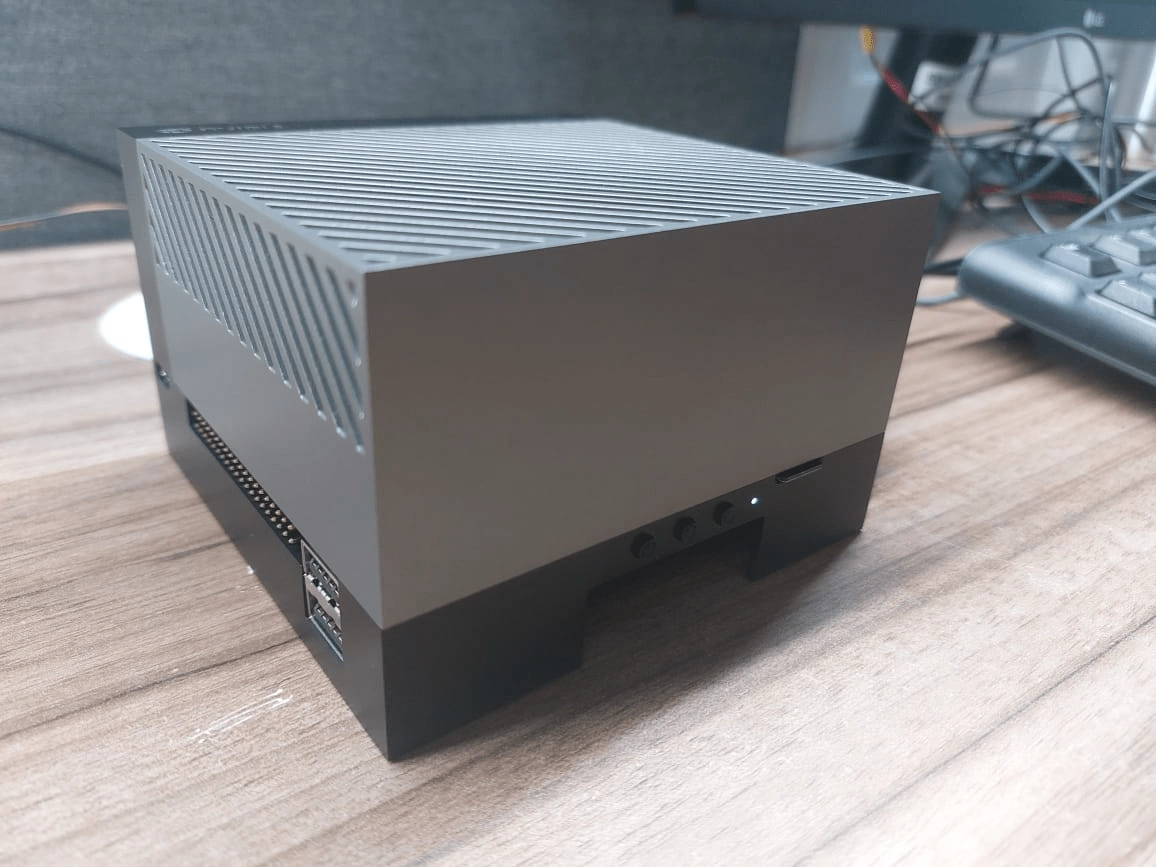
Our engineers are crafting innovative solutions with NVIDIA Jetson Orin, unlocking its immense power to revolutionize diverse applications. 

Here are some interesting use cases where Jetson Orin, robotic arms, CAN protocol communication, and OpenCV image processing converge to redefine the future:

Robotic Arms with Precision:

Imagine robotic arms in manufacturing plants equipped with Jetson Orin, seamlessly communicating via the CAN protocol. With the unmatched computational capabilities of Jetson Orin and real-time data exchange facilitated by CAN, these robotic arms exhibit unparalleled precision and efficiency in assembly tasks. We have delivered numerous robotic projects involving pick and place robots.

Image Processing Applications:

With OpenCV on Jetson Orin, we’re transforming image-processing landscapes. In document management, Jetson Orin’s processing speed combined with OpenCV’s algorithms ensures swift and accurate document classification, extraction, and storage, streamlining workflows and enhancing productivity.
NVIDIA-Jetson Orin-1

Food Delivery Reinvented:

Picture this: food delivery drones equipped with Jetson Orin, navigating urban landscapes with precision and safety. With image processing capabilities, these drones effortlessly identify delivery locations, ensuring timely and accurate deliveries. 

PCI Carrier Board Innovation:

With PCI interface in Jetson Orin, we can develop enhanced career boards. From integrating additional sensors for enhanced perception to amplifying connectivity options for seamless data exchange, the possibilities are endless.

Speech AI Applications:

With Jetson Orin’s robust architecture as the foundation, our team is venturing into speech AI applications. From virtual assistants to voice-controlled interfaces, Jetson Orin’s computational accuracy and versatility empower the development of intuitive and responsive AI systems.

This is just a glance of a busy day filled with creative solutions at Srushty!